A Life in Many Colours: Bro. Julian Rees on Ritual, Spirituality, and the Crooked Road of Freemasonry
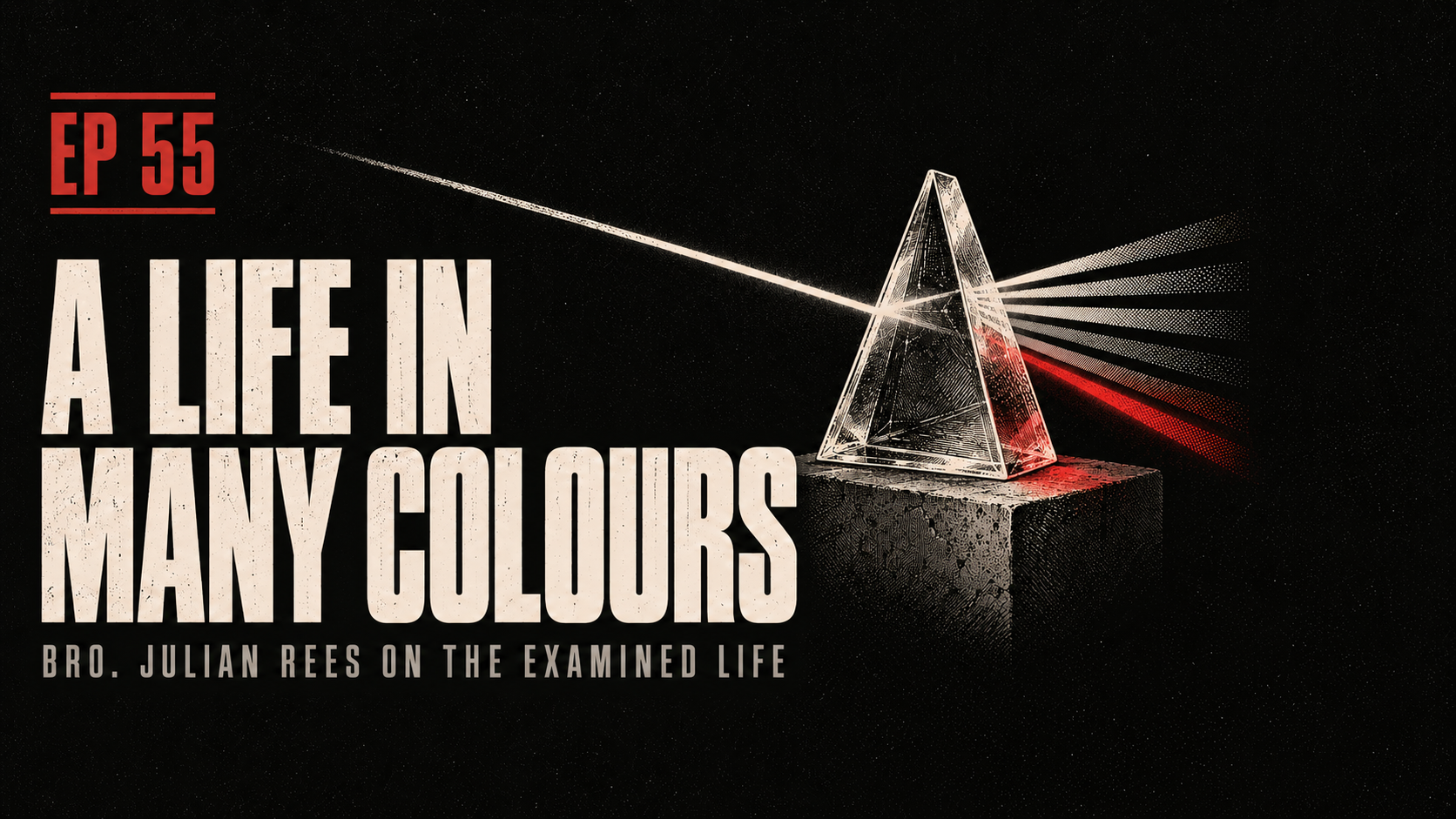
Bro. Julian Rees, nearly sixty years a Freemason, turns the lens on himself in his memoir A Life in Many Colours. He talks with Troy about National Service and the V-2s, learning the ritual word perfect and then understanding it, the tracing boards, why he walked out of the United Grand Lodge of England over the word spirituality, laïcité, a 96-year-old sculptor's complaint about lodge, and why the journey is never a straight line.
A Life in Many Colours: Bro. Julian Rees on Ritual, Spirituality, and the Crooked Road of Freemasonry
For Episode 55 of The Mystic Tye, Bro. Julian Rees, nearly sixty years a Freemason and one of the best-known writers on its spiritual dimensions, sat down with Troy Spreeuw to talk about his memoir, A Life in Many Colours. They cover a boyhood under the V-2s, National Service, a ritual learned word perfect and then understood, the tracing boards, why he walked out of the United Grand Lodge of England, laïcité, and why the journey is never a straight line. What follows is their conversation, edited only for readability. The words are Troy's and Julian's, as spoken. Listen to the full episode at mystictye.com/episodes.
Troy: Welcome to The Mystic Tye, a podcast for Freemasons. I am your host, Troy Spreeuw. My guest today is someone who has spent nearly 60 years asking a deceptively simple question: what is Freemasonry actually for? Julian Rees is one of the best-known contemporary writers on the spiritual and initiatic dimensions of the craft, an accomplished English Emulation ritualist, a founding member of the Cornerstone Society and Canonbury Tower Lodge, and the author of works including Making Light, The Stairway of Freemasonry, Tracing Boards, and Freemasonry for the Heart and Mind. Julian has consistently argued that our ceremonies are more than traditions to be preserved, they are experiences intended to transform us. His latest book, A Life in Many Colours, turns the search inward. It is the story of the experiences, people, contradictions, and choices that shape the man behind the Masonic writing. Please welcome Julian Rees. Good morning, Julian Rees.
Julian: Good morning to you.
Turning the Lens Around: Why a Memoir
Troy: It is a pleasure and a joy to have you back here with me on The Mystic Tye. We had never talked before then, so twice in one year is like a bonus. I feel like I need to point that out. Look at how much of your time you've spent with me this year. This is glorious. You've put out a new book, and that's the reason we're talking today. It's a memoir. This time it's a memoir. You've spent many years looking at Freemasonry, its symbols and ritual, and mostly its spiritual possibilities, and yet now you've put yourself under the microscope for a change. Why did you decide this is the time for Julian Rees himself to be the subject?
Julian: All right. I'll tell you the previous book to this one was a little book of short essays, which I call Here Comes the Light. I don't know if you've seen it. I put it together with various little bits that I'd picked up here and there, and it made quite a nice little book of essays that lodges can use or individuals can use. And each essay has a little bunch of questions at the end that you can answer. And anyway, I'd finished this, and I was chatting with David Harrison, whom you know very well, I think, yes? And David said, "What are you gonna do now? You just finished this, but what are you gonna do now?" I said, "I don't know. I really can't think of anything." He said, "I can." He said, "You should write a memoir." He said, "Your life in Freemasonry has been so exceptional that it merits you writing a Masonic memoir." And I thought about this, and I thought who's gonna be interested in my life?
And then I thought, "As a matter of fact, I have had a very interesting life, even outside of Freemasonry." So I started writing, and the more I wrote, the more I found that there were all sorts of interesting little quirky things about my life that might interest people. So I finished a draft, and I sent the first half of it to David, and he said, "Yeah, it's great. Go ahead. Carry on. Finish it." So I did, and everybody was very complimentary, and they said, "Yes, this is good." Lewis Masonic didn't want to publish it because they said, "We don't do biographies," which is not quite fair 'cause this isn't a biography. It's a memoir. And the two things are different.
Troy: Oh, of course. Yeah.
Julian: But anyway, Arima Publishing agreed to publish it, and here it is. And I'm really very pleased. I particularly like the cover, which was done for me by a Romanian artist friend, Ioana Nestorescu, who's a very talented lady, and she did this cover for me, and we're really very pleased with it. And she also did some of the internal illustrations. A lot of the illustrations are actual sort of factual, historical things, but she also did some artistic illustrations for us. She's a very talented lady. And it came out, what, was it March, April it was launched? It seems to be doing quite well. Yes, as you say, I turned the lens around, and I turned it on myself. Yeah, I wouldn't have done it if David hadn't suggested that.
I was intrigued by his suggestion 'cause I thought, "Is there really any interest in the author himself? You want to read what he's writing. Do you want to read about him and his life?" And I decided that there was something there. So I wrote it, and people seemed to like it. That's all I can say.
Troy: I'm cheating, I used Google to find out who said the tragedy of an unexamined life. But it was Socrates that said that.
Julian: What did he say? The tragedy of what?
Troy: It's a tragedy of an unexamined life. It wastes the human capacity for reason and leaves the soul or mind undeveloped, unconscious, and unfulfilled.
Julian: I can subscribe to that. That sounds good.
Troy: From that, when you looked back, you started examining more closely, 'cause in writing of this nature you're gonna wanna narrow down the historical facts as best you can remember, right? Did you end up rediscovering parts of your life that you had largely forgotten or set aside? What did you learn from examining this examined life now?
What Early Life Builds: National Service, the V-2s, and Two Parents
Julian: I learned two things principally. Firstly, as you say, you rediscover stuff that has lain long forgotten but is never completely gone, is always there waiting to be recalled. Excuse me. So there was that. But also, and this is very interesting, Troy you wanna pay attention to this 'cause this really is quite interesting. I discovered that events in my early life, even early childhood, and when I was a teenager and growing up and going in the army and doing all that thing, events in my early life have shaped the way I think. They've shaped the way I do things. Give you a very banal example, okay? I got called up into the army. We have this thing, we had, not now, but we had in those days, this is 1957, in Britain, we had this thing called National Service, which meant that every male who had finished school and was not going to university got called up to serve in the military forces for two years, minimum of two years, either Army, Navy, or Air Force, okay?
And so it was compulsory. You couldn't get out of it, right? There's no way out.
Troy: You did try to get out of it, didn't you? You were running from it.
Julian: I tried. I kept running. But I knew I was gonna lose the battle. I knew I was just gonna be called up. But my point, the point I was gonna make, Troy, was this. We went in the Army, we National Service people, so there we were being trained by regular Army officers and NCOs and so on, okay, who actually hated us. They really hated us because to them we were absolute rubbish. We were not professional soldiers. They didn't like training us to be soldiers, and they were, they made it very clear to us that we were complete rubbish, okay?
Troy: What do they want with conscripts anyway?
Julian: And the effect this had on me, I had a reasonably privileged upbringing, okay? All sorts of, private school and all the rest of it and so on. And so the effect that had on me was to put me in my place, it wasn't justified what they were doing, these Army guys who were being, insulting me and all the rest of it wasn't justified. No way, okay. But still, all the same, it taught me the value of humility, and that is a Masonic concept which we all understand because we know having been placed in a humiliating situation when we were initiated, okay? So that experience teaches you something. There were other things in my life that taught me something. Likewise, in the Army we had this sergeant who said to us, "When I say move, I want to see you all down the other end of the field. Go." And we all ran.
"Come back. When I say move, I want to see you all down here. Go." All right, this happened three or four times until we got the message, and the message was, "Listen carefully to words of command and words of instruction because if you don't, you're gonna be maybe in deep trouble." And it's just, it's a silly, banal example, but things like that shape us, and we don't realize it. They shape us. And so when I came to sit down and start writing, all of these life influences came into play and affected or created the way I wrote. So as a writer, I have to look back on even early events in childhood. In 1940, yeah, 1940, think back, we'd just had the Battle of Britain.
The Germans had been having a good old go at my particular part of England, my southeast, and I heard some adults discussing the possibility of a German invasion. Now, I was four years old at the time, and that implanted a deep fear inside me, okay? Which lasted a long time. All these things form the way you are, so that fear did something to me. It shaped the person I became. That's the only way I can describe it.
Troy: The fear, but juxtapose that with a story you tell in the book. Genius advice, by the way, for people who speak or write: you wanna talk in stories. People relate to stories. It's hard to relate to facts without something to relate them to, right? And you've done a great job at telling stories. About the same time, you tell the story in the book where you're on the street, hearing a V-2 rocket attack, and looking across the Thames and seeing a building vaporize.
Julian: I was just, "Wow, look at that."
Troy: Look at that. The building just, poof.
Julian: Whereas my mother, who was with me, she was scared shitless. She was very scared.
Troy: We could swear here. You could say fuck if you want, no problem.
Julian: Oh, we can? She was very scared, put it that way, and we scrambled down out of this tram and ran for cover. It was unreal.
Troy: You tell a good story there. You talk quite candidly about your parents. You had a father who was Catholic clergy, if I'm not mistaken?
Julian: He was Anglo-Catholic. It's a branch of the Church of England, what do you call, the Episcopalian Church. Which is very Catholic. Okay? So the priests.
Troy: High Church.
Julian: Exactly. Incense, singing, the whole thing. He was very sternly dogmatically theologian. Okay? He didn't mess about with pastoral care for his flock. What he did was to preach hell and damnation at them from the pulpit. Okay? Theology, pure and simple.
Troy: And yet your mother was considerably more American in her sensibility. She was American, right?
Julian: She was born in America, yeah.
Troy: Yeah, and had just a different approach to people and faith.
Julian: Yeah. She was very immature. She was 19 when they married. It was ridiculous. It was just, it was a complete mismatch. It was ridiculous. She adored him, she idolized him. She looked up to him and thought this wonderful educated man with this incredible brain. That was what it was for her. And then of course, five, six, eight years into the marriage, she started to realize, that it wasn't all honey.
Troy: It's funny you talk about the tension with them, because I think the tension with them is almost alive in you, in your experience and encounter with Freemasonry, and in how you practice your craft. I know there is some discussion about this in the book. Do you wanna talk about that?
Julian: Only in the sense that if you go through traumatic events like parental bickering, the eventual split and all the rest of it, if you live through that, it makes you more, it ensures that you take things more seriously in life, that you're not flippant, that you're not frivolous about it. So when I came to Freemasonry, at first when I looked at it, I thought, "Yeah, this is very nice. This is like a social club. Yeah, I'm gonna enjoy the company of the guys and so on." But when I started to understand what was going on underneath, when I listened to the words that people were parroting and just parroting and parroting the words, and when I actually set the words out and started to read them and see what they meant, on what ground do our lodges stand?
On holy ground. They stand on holy ground? Because the first lodge was consecrated. Now, what is all that about, and how am I going to just walk past that and not examine it? That's what you were asking about, the trauma of a troubled home background, okay? That's what that does to you. It makes you stop and look at such a situation and not just pass it over.
Troy: My parents divorced, yet both my brother and I never did. We've been with the same first person we've married, in his case more than 30 years, in my case more than 25 years. And it's one of these things where I think the tension created makes you realize that parents are also people, and you can see them as flawed, and you see them as human beings rather than these godlike personalities that rule your life when your family life is a little more stable. I think it changes young people. It changes how they view the world and how they view themselves. It often will make you more introspective, but I think it will also make you just realize that we're all flawed, and you could still see the good in people that are flawed, and you could still love people that are flawed. And some people take that to an extreme and try and fix other people, and I think that doesn't work. People gotta wanna work on themselves anyway.
Julian: But somehow, Troy, and more important, the experience of seeing your parents mess it up does help you when you're conducting your own marriage. I'm not saying my marriage has been perfect. I wouldn't claim that. But it has formed the way I conduct myself in my relationship with my wife and the rest of the family, of course. And again, here we are. We're talking about things which affect us in early life, the effect of which comes out later when you understand what you're doing and why you're doing it in later life.
Troy: Do you think that experience with your parents, and the contribution to your personality of each of your parents, affects your Freemasonry?
Julian: No, I could hear, I could hear what you were going to say. No, I don't think so. Not directly. I think... But then who am I to judge? If I've ever shown any compassion to anybody, where does that come from? I've never looked, I've never searched for the origin. If I show some understanding of somebody's distress, where does that come from? How have I developed that in my life? I'd need to go back and look. But it all comes from somewhere.
Troy: Of course. Nothing in isolation, right? To use a scientific phrase, locality fails terribly in human society. All socialization is syncretic, and how do you break apart everything to analyze it? Anyway, it's fun to look back and think about, but of course, again, we're often too close to ourselves to really know. But I'll ask you about something you just alluded to. You did spend a lot of time analyzing the ritual. In fact, you showed me your silver matchbox the last time we got together. And that takes more than a wink and a smile to get one. You've gotta be perfect in your English Emulation ritual to get one of those, and the tightest scrutiny from other masters of that particular ritual. And in so doing, you talk about in the book that it's supposed to transform us, right?
It isn't just meant to be repeated, and you just alluded to it now. Looking back at so many years of conferring these rituals, what did Freemasonry actually change in you? Where would you be without it? How far down the road are you, and can you look back and see where you might have gone without?
Word Perfect Is Not Enough
Julian: I can honestly say that because of Freemasonry, I am a more tolerant person than I was. I acknowledge that in my youth I was a very impulsive, intolerant hot-headed sometimes sort of person.
Troy: I wouldn't know anything about that.
Julian: Yeah, no, but a lot of us are in our youth. Now, I'm not saying that Freemasonry has made me a perfect person. I don't think there's any such thing as perfection. I think the nice thing about Freemasonry, as we all say, is the journey. We never reach the destination. But there are little destinations all along the way, such as little snippets of self-knowledge. "Oh, I'm like that, am I? Oh, I do that because of... Do I? Oh, okay. Let me take that in and process it and hang onto it." Now, Freemasonry does help you with that, no question. It does, as long as you do immerse yourself in the ritual. No good just parroting the words and coming out the other end. That's what I was doing for years.
I was parroting the words, and everybody said, "Oh, isn't he wonderful? He can do it word perfect. He can draw a matchbox. He does all this." And after a while, I said to myself, hold on, these aren't just words. These mean something. What do they mean? And from that point on, I began to understand the effect it was having on myself, the effect every time I went to a lodge meeting, every time I opened my ritual book and read the words, and, "Oh, hang on, this means... Oh, I never thought of that. Yeah, look at that." And so on. Okay? There's all that goes on. And so there I was becoming a different person. I won't say better, but it was forming me. It was having its own little formative influence on the rude matter that was me when they threw me out of the army.
Troy: Approaching your due form.
Julian: Yeah. Exactly that.
Troy: Now, you worked hard to become an accomplished ritualist, I imagine, 'cause anybody who's done this, even if you have a penchant for it, requires some effort, right? Knocking off those rough edges. But that's like you say, it's just the words in the ritual. Did mastering the ritual help reveal what you now approach as a spiritual life, the spiritual possibilities? Did the mastery show you limitations in yourself? What was that like? You wanna talk a bit about that?
Julian: The fact that I had gone for word perfection in my early Masonic career, which I later came to discard and say, "No, hang on. That's not all there is to it." Yet, at the same time because I'd learned the words word perfect, I was able, even in my everyday life wandering around to think about a Masonic phrase. "Let the emblems of mortality which lie before you lead you to contemplate on your inevitable destiny. And to guide your reflections to that most interesting of all human studies, the knowledge of yourself." Yeah. There's all that. And if you have that word perfection, then it's going to be laid out there ready for you to analyze and to work on, and to interpret in the way you want to interpret it.
I'm one of these people who says Freemasonry is not dogmatic. I say Freemasonry is liberal. I know there are a lot of grand lodges around the world who disagree with me. But what that means is that when a new, newly made Entered Apprentice comes to me and wants my help getting to know how things fit and so on, I always say to him or her, "What effect did it have on you? Tell me what your impression was of your initiation ceremony." "Oh, I liked the bit where the master did so-and-so." "Yeah, go on." "And I liked this one." And all of a sudden he's thinking. He wasn't before. I've started his motor and he's thinking. Now, we've got to do that as Freemasons. We've got to process all these words and actions that have happened in a ceremony in the temple. Otherwise, it's not going to mean any damn thing at all. I'm not sure if I've answered your question, but that just came pouring out.
Troy: This is good stuff. What I'm driving at is, let's compare it. Early in your career you were word perfect, and that was the goal, was delivering the ritual perfectly. Now, I think having it to memory, the meaning committed to memory, and delivering it to a candidate, especially an exemplification, when you're actually initiating or passing or raising a candidate, the delivery and the performance, a confident delivery and performance matters more than word perfection. And I have this argument with guys that are like, "The magic works whether you want it to or not." It's, yes, it's because of the intention and the liberation, as you just pointed out, the liberty that's implied, the freedom of conscience that's implied with our work. Do you wanna compare that a little bit?
'Cause I know you talk about it in the book too, where the performance that occurs, making sure the candidate is receiving you, first of all, and then discussing it with the candidate after the fact, and making sure the candidate gets the message is more important than the candidate hearing every word perfectly. You wanna talk about that?
Julian: I agree. I agree. And so, when I was back in United Grand Lodge of England, they made me a grand officer, and so all grand officers sit up in the east. I didn't like that because when a newly initiated brother was finished with his initiation, he would sit somewhere in the body of the lodge. I wanted to sit with him. I used to come down and sit with him and ask him, "So how was it for you? What did that ceremony do for you? Did it do anything for you? And if it did, what? If it didn't, what were you expecting?" And so on. So we'd talk like that a lot. As Freemasons we operate not with the intellect of the brain, but with the intellect of the heart.
We're intuitive as Freemasons, and this is the clue that we actually think with the heart, and I want him to do that. So I'm sitting there with this newly initiated brother, and I'm asking him to immerse himself in the feeling of what's happened. If he can remember the words, fine. If he can't, it doesn't matter. He can go back and look at those later on. But immerse himself in the feeling and feel it. And I have to say, this is something which, you said that in writing this book I've turned the lens round and put it on myself, but actually there's a whole big section of the book where I talk about the tracing boards. Hang on. Where's the camera? Camera's over here. Where I talk about the tracing boards.
The Tracing Boards and Freedom of Conscience
Troy: Yeah, the tracing boards. What chapter is that?
Julian: That's chapter 11. It's called More Books than Tracing Boards. Now, in this section of the book actually I've turned the lens back again and I'm actually dissecting, analyzing, decrypting Freemasonry from the symbols on the tracing board. These you won't recognize, but they're English tracing boards.
Troy: Oh, yes we do, 'cause we use English Emulation ritual in Canada.
Julian: Who works Emulation in your country?
Troy: The Canadian work is Emulation work from various points in history.
Julian: Okay, so you would recognize that tracing board too, would you?
Troy: Yeah, if you back it up a bit, that's one of the Harris tracing boards.
Julian: Yeah, it's the Harris 1845 second degree.
Troy: We have an original set of miniatures here bound up in a journal, which also includes the tracing boards.
Julian: And then there's the third degree.
Troy: And there's lots of versions of that. Harris did a number of different versions.
Julian: So all I'm saying is that there's a whole section in this book where I'm actually back in the driving seat teaching Freemasonry and not talking about myself, which is actually quite refreshing.
Troy: When you did the analysis in your memoir, you talk about the different sort of meanings behind the symbols in those tracing boards.
Julian: Yeah, the allegorism.
Troy: Was that something you did early on, or is that something you came to much later?
Julian: It was something I came to much later. When I started writing the Tracing Board book, I think I started it in 2003, maybe 2004, something like that. So it was really quite, I know that's a long time ago. A lot of people weren't even initiated then. For me, that's halfway through my life, so you know. It was a very peculiar thing. I'd finished my first book with Lewis, which was Making Light: A Handbook for Freemasons. That was my first book. And I'd done another book for them which was aimed at people who wanted to join Freemasonry. The title was, So You Want to Be a Freemason? It was fun to do because I could research all sorts of little side parts of Freemasonry, like the charitable institutions and the old age homes and the nursing and all that.
And so then I finished that, and then I wasn't actually planning to write anything else, but I looked at the tracing boards and I realized that the tracing boards we use, the Harris ones, as you rightly identified were only one set of tracing boards. There were tracing boards all over the country, in the UK, quite different from Harris, and some of them a lot older than Harris. And then I'd been to France and seen tracing boards there. I'd been to Germany, tracing boards there. And I've been to America and not seen any tracing boards at all because they don't use them. They're stuffed away in museums. But I got them out. I got some lovely American tracing boards in there. And I thought to myself, hang on, we include these tracing board explanations in our ritual, but how much do we know about what the actual symbols are teaching us?
For instance, in that first degree Harris tracing board, you've got three sources of light. You've got the sun, the moon, and the blazing star at the top of the ladder, right? And the blazing star is brighter even than the sun. Now, the sun is the brightest source of light in our universe, you would agree?
Troy: To us, yes.
Julian: Closest to it, yes. And yet for the Freemasons, the blazing star is even brighter than the sun. What is that telling us? The power of divinity, the power of the Almighty, of celestial realms. Jacob, when he looked up at his ladder, what does he see at the top? This glorious light shining, which was the presence of God. So the tracing boards have got a hell of a lot to teach us. On the English Harris first degree tracing boards, there is actually a Jacob's ladder resting on what? On the Volume of the Sacred Law.
Troy: It would have said the Holy Bible at that time, but...
Julian: It doesn't matter what you call it. It doesn't matter.
Troy: It doesn't, does it? I'm talking a lot about freedom of conscience these days. In fact, I'm delivering a talk at the end of the month on it.
Julian: Good for you. Good for you. Freedom of conscience is very important.
Troy: We're living in a time when Biblical literalists and political originalists, especially south of the border from where I live, misinterpreting what our craft has meant to society, right? They're intentionally misreading to use the holy book as a weapon.
Julian: Yeah, maliciously, not intentionally.
Troy: Yeah. And they know they're doing it. The smarter among them, the leadership, know they're doing it and they know why. And then they point the finger at us as being the wrong sort. "You're not the right kind of Christian," or faith practice or whatever, even though we don't espouse any particular one. They're like, "It doesn't matter which one. All the ones, they're all wrong and we're right." I think it's important to arm our brethren with almost like a French liberal idea of freedom of conscience. Which I think is now adopted largely widely amongst the craft, where we talk about many places, volume of sacred law, not the Holy Bible. I'm good with either. I'm not a Christian, I've told you that before, but I have no problem with the Christian Bible or any of the other volumes of sacred law.
If I were to travel and they didn't have a Bible on the altar, I'd be fine with that. Or if they had a blank book. I know that's the wrong kind of Freemasonry for somebody like me, but still this is my own personal viewpoint. Anyway, I'm talking about this freedom of conscience because I, like you, think that Freemasonry is a veiled initiatic and spiritual path, and I believe the magic works whether you want it to or not, and that magic is to create somebody who's more, you said, tolerant. We talk about forbearance, right? I don't necessarily agree with the message of tolerance even towards intolerance, 'cause I think it's up to us to point out the hypocrisy and intolerance we see, but it's more important we work on ourselves, right?
'Cause if you wanna make a better world, you gotta build a better you. Anyway, do you talk a lot about Freemasonry as a spiritual pursuit, and you even say it out loud in this memoir, which I don't know if you've said it out loud before, but I find it remarkable. It could be a secular, completely secular spiritual pursuit, and I think there's lots of people around that would be like, "Ha, what does he mean by that?" Do you wanna give voice to that? This idea of a secular spiritual pursuit?
Julian: I do.
Why Julian Left UGLE
Troy: Our institution experiences a lot of tension, we talked about that the last time we were here. Perhaps we could talk a little bit about what you mean by that, and why it's of no threat to anybody who doesn't wanna pick a fight maybe.
Julian: Let me start by just reminding you, and I've set it out in the book, why I left the United Grand Lodge of England. And the reason I left was as follows. There was an event in the press where an Anglican priest who was a Freemason was told by his bishop, who was anti-Masonic, to stop practicing Freemasonry, right? Or he was gonna get the sack, he was gonna be thrown out. And this so outraged certain sections of the public that there was quite a row about it in the press and so on. This man is obeying what he regards as his free right to spiritual pursuit and spiritual fulfillment.
Troy: Yeah, it is.
Julian: Nobody has the right to say to him he can't do it. So we all thought this, and the press took it up, and the press were quite hostile towards this bishop, okay? Our Deputy Grand Master in the United Grand Lodge of England stood up in Grand Lodge and drew attention to this event, and said what a pity it was that the powers that be were reacting in this way, the powers that be in the Anglican Church were reacting in this way. But then he spoiled it because he said the following sentence, and this was what did it for me. He said, "Freemasonry, as we all know, is not a religion. It is not a substitute for, nor an alternative to religion. It most certainly does not deal in spirituality." What?
Troy: Yeah. Maybe not for him.
Julian: I couldn't believe my ears. I knew this deputy grand master very well. Jonathan Spence is a good guy. And so I sat down and I wrote him a letter. I said, "Dear Jonathan, you're absolutely right about Freemasonry not being a religion and not being a substitute for religion, and you are absolutely right to attack this bishop for being so mean-minded towards one of his priests. But you cannot sit there and say that Freemasonry does not deal in spirituality. We say prayers to the great architect of the universe at the beginning of our meeting. We kneel and we take an obligation with our hand on the holy book. For heaven's sake, help me here, what more do I have to do to tell you that Freemasonry is a spiritual pursuit?" Actually, I'd been to Alexandria, Virginia, two months before that, and I'd given a talk there to a lodge.
It was Andrew Hammer of the Masonic Restoration Foundation, right? He invited me to give a keynote talk, and so I'd been there. And the title of my talk had been The Spiritual Path of Freemasonry, okay? I can't be more explicit than that, can I, really? Anyway, so I sent Jonathan Spence a copy of my Alexandria, Virginia talk. I said, "Read this. Tell me where I'm wrong. If I'm wrong I wanna know, but you gotta tell me." Do you know what? He didn't reply to my letter. What I got was a two-liner from the grand secretary. "Dear Brother Rees, the assistant grand master has asked me to thank you for your letter and to let you know that your views are noted. Yours sincerely and fraternally," da-di-da-di-di-di.
So I left. I left. That was it.
Troy: I've got a question later about when you left, and maybe we'll talk about it again. But perhaps the people who believe they have the monopoly on the spiritual pursuit, the clergy, the organized clergy especially, now feel the political control they had slipping through their fingers rapidly. I understand in sociological studies they're talking quite a bit now about the number of women leaving the church because the churches have adopted this originalist kind of masculinist but very parochial and patriarchal message. And of course they're like, "Nope." And if they leave, sure men might show up on Sundays and repeat what they hear and follow along, but it's oftentimes the women that set the coffees up and bring the kids and organize the Sunday school. And if they drop out, and apparently they are dropping out in numbers that are double what they were before.
And I have some sympathy. As you drive around Vancouver here, you see a lot of churches for sale or churches going under, and the only ones that seem to be thriving are the ones that are going back to this, not an 18th century message, like an 11th century message, right? They don't wanna roll back before civil rights. They wanna roll back before the Reformation. They wanna go way back where they got a king, right? That's what you're seeing. And there's some good podcasts out there. Brad Onishi and his friends at the Straight White American Jesus. It's an excellent place to get information on that. And my friends at Conspirituality Podcast do brush up against this anyway. But Freemasonry is no threat though and I'll tell you why.
You will find more spiritually grounded and church-supporting men in the craft than you will in wider society. And why is that? I think generally good men see the value of some sort of spiritual guidance. But what modern man rejects is the old dogmatic, observably unscientific ways of living your life. You just can't, you can't square that circle, right? And so the Catholics and the Reformation Protestants might be pissed at Voltaire and Kant and Descartes, but the toothpaste is out of the tube. You're not putting it back in, not without enforced violence. And this is why talking about freedom of conscience is so important. Because if you take what these people are talking about to the nth degree, not just to Freemasonry, but to any liberal society, it gets to be you're in the in club or you're gonna be subject to dehumanizing violence, which is what we, and you, lived through during the last global conflict.
I think Freemasonry plays a role in this, trying to help a good man remain faithful to his society and to his faith-based roots. It helps him square that circle of living a spiritual life, an examined life, without conflicting with the dogma that he's finding in his church. And it should be more about pastoral care and community than it is about enforcing the will of this invisible friend over that invisible friend, and lots of my Christian brothers get mad when I limit it that way. But that's effectively from a philosophical perspective, from a rationalist, positivist perspective, that's what you're up against, right? You gotta deal with that. I said a lot just there. Any further comment on this secular pursuit of a spiritual life?
Laïcité, the Light Within, and What Lodges Are For
Julian: It all resonates with me, Troy. But I'll tell you something interesting. Because I speak French and German, I've been able to travel a lot in Europe and go to lodge meetings and understand what's going on and all the rest of it. So what happens in France? You know what the situation in France is, don't you?
Troy: Depending on the grand lodge, yes.
Julian: No, I don't mean with regard to Freemasonry, France and spirituality. The French have this thing. At the Revolution in 1780, whenever it was, they said once they'd cut the heads off all the aristocracy and the royalty and all the rest of it, they said, and this was important, "There is no power greater than the power of the people." Okay? That was the mantra that they were chanting as revolutionists in France at that time. And that was fine, and that was absolutely correct, and it was good for them. But the thing is that what that resulted in was them saying, "We don't want any priests. We don't want any incense. We don't want any church music. We don't want any prayers and all that shit. We don't want anything to do with that, it gets in the way of the revolution," they said.
So what they were doing, yes, they were having a go at the episcopacy and the authority of the church, which had been massive in those days, right? They were having a go at that, and quite rightly. The problem was that by doing that, they threw out spirituality. This French secularism, laïcité it's called. We haven't got a word for it in English, but the nearest is secularism. The thing with laïcité is they've tragically conflated the authority of the church with the human spirit and what goes on inside each individual human being. And because of that they've said, "Laïcité, yes, no gods, no this, no that." But they've forgotten. And so when I go to a French lodge, I usually preach this sermon. I say, guys, listen to me carefully because laïcité is not anti-spiritual.
It's fine. You can practice laïcité. Stick with it. You've done it for 200 and however many years. Go on doing it. But don't forget that when you say, before they take the blindfold off a candidate in a French lodge, "Prepare yourself, monsieur," he says to the candidate, "to receive the light. Not only that light which only falls on the eyes, but a light more pure which vivifies the spirit and enlivens the conscience." Now, is that a philosophical concept? Maybe. But it doesn't abandon the concept of spirituality. On the contrary, it actually embraces it. I always preach this sermon to the French whenever I get the chance, and most of them take it in good part and they say, "Yeah, you're actually not wrong," and so on.
But it's terribly important, this secularism. And that's where my friend Jonathan went wrong when he said it most certainly does not deal in spirituality. He was thinking of ecclesiastical spirituality. And there he's absolutely right. The church has nothing whatever to do with Freemasonry, and the two should not get involved with each other. I don't like it. Okay, we both talk about God, but that's about the only thing that we have in common. Spirituality, come on, without it, Freemasonry is nothing. Without it, it's nothing. My own spirit, my own search for self-knowledge as a Freemason is the big part of why I'm a Freemason.
Troy: I imagine we could talk about this quite at length and probably agree most of the way across. And I see Freemasonry as the solution for the materialist who has a spiritual yearning. He wants to treat his fellow man on the level as a rational, positivist, scientific individual, because this universe we live in, as the great architect of the universe created, has rules. But the inner life, that's expressed by the square, I think. That's why it's the first thing, the initiation representing the square. But the compasses are a circle, and the circle is not the 90-degree angle of the positivist. It's a much more all-encompassing...
Julian: It's all-encompassing, and it embraces. It embraces.
Troy: This idea of something bigger than one's self, right? And whether one kneels for that or not because of your religious difference, right? Kneels before it or stands to view it and embrace it as we're all part of it, right? These things could all be discussed to the nth degree, but I think Freemasonry, in our symbol set, we can embrace both.
Julian: There's a prayer in the Emulation ritual, you may remember, the prayer that the master says over the candidate. In the middle of this prayer he says, "Endue him," the candidate, "endue him with a competency of thy divine wisdom, that assisted by the secrets of our Masonic art, he may the better be enabled to unfold the beauties of true godliness to the honor and glory of thy holy name." Now, unfolding it, where is he unfolding it from? I've probably told you this already. Where is he unfolding it from? It's not outside him somewhere. It's not some god up in heaven somewhere or out in the sea or somewhere. No, it's inside himself. The divinity is in here. And so when the blindfold comes off and he sees the light, it's the light of self-knowledge. It's the light of inspiration in himself.
Troy: Let's talk a bit more about that. Now, not all Freemasons experience it the way you and I experience it.
Julian: No, I know they don't.
Troy: Some guys join and think of it, and you cover this quite a bit too, like a fraternity with the charitable work and social aspects. Now, maybe one in 10 Freemasons are interested, or two in 10 are interested in more spiritual interpretation of it. Are these simply different approaches to the same institution? Or does the emphasis on the fraternity actively obscure what the craft is trying to do? Or do we need the membership to find the right kind of people? Or is the purpose of Freemasonry to convert that tiny margin in the middle where the magic works, whether they wanted it to or not?
Julian: All of that is right, Troy. All of that. All right.
Troy: A solution? Come on.
Julian: No, hold on. Hold on. No, I'm not dogmatic. I don't provide solutions. I provide paths that you can follow, and you can ask questions, and you can come back to me and say, "What does this mean?"
Troy: I'm trying to trap you into a dogmatic answer. Come on.
Julian: Yeah, come on. I am serious. Let me address it seriously. I have noticed that in American lodges, I can't speak for Canadian lodges because I don't have a lot of experience. I have no experience. I don't know about Canadian lodges. I have no experience of them, but what I know of American Freemasonry is it's all about civic pride, giving to charity, looking after your neighbor, and all the rest of it. There's never any mention of self-knowledge, of getting down and understanding who I am, what am I doing in the universe, why am I here? There's never any mention of that in American Freemasonry. And in a lot of European Freemasonry, especially in some grand lodges in France, the same civic pride thing comes in and dominates, which is a pity.
But more in Europe than in America we have this concept that Freemasonry is a spiritual pursuit. It is something that we have to get down and be serious about, and not just adopt it like a political system and say, "I believe in this and I'm a card-carrying member of this or that grand lodge, and here's my subscription." It's not like that. And as I say, in Europe there is a growing understanding that Freemasonry is a spiritual pursuit, and people are coming to accept that much more than they did when I first joined in 1968.
Gerry Gerrard, the Sculptor, and the Big Tent
Troy: Conversely, if a guy is in the craft for 50 years, is a good brother, always faithfully attends, supports his charity, attends his lodge meeting, and engages with the work, but wouldn't necessarily go as far as you and I might go, has Freemasonry still accomplished its true purpose of making a good man better?
Julian: It does it in parts, but it's nowhere near as successful as it ought to be. It does it in parts, it does it in little ways. I have known very good men who've been very good Freemasons, but I've also known the opposite. Let me tell you a little story. This'll tickle you. When I came to write the history of my mother lodge, my UGLE mother lodge, which was 100 years old in 2000, and so we had to write a history. I started looking back at some of the old members, and there were one or two members who never came, right? They were on the membership list, they paid their subscriptions every year fine, but we never saw them. And I looked at this guy, Gerry Gerrard was his name.
Oh, God, I thought, "I don't even know what he looks like." So I rang him. I knew what he was. He was actually a prominent sculptor in stone, so he knew more about stone masonry than most of us Freemasons, okay? So here he was sculpting in stone, Gerry Gerrard, and he was 96 years old. And I, there I was writing this history, so I thought, "I'll go down and interview him." So I went down. There he was sitting in his studio surrounded by huge lumps of stone which he was carving away at, and he was a lovely man, 96, still working, okay? And I said to him, "Gerry," I said, "when did you last come to lodge?" "Oh, I think it was in 1938," he said.
It was like that. It was that sort of conversation. "I think it was 1938." I went, "Yes, I'm sure it was." I said, "You've been paying your subscription all these years. We've never seen you." "No. No. No, I'm very disappointed with Freemasonry." I said, "Why? Tell me why." He said, "They're always doing the same thing. When they conduct a ceremony, it's always the same. It's just like it was when they did it the time before. Me, when I pick up a piece of stone, I'm carving something new. I'm really doing something new. This is something quite special. You will never see anything like this. This is unique, but you Freemasons, you're always doing the same thing again." I thought, "What an interesting concept." There he was sitting in his studio, always producing new ideas in stone, right?
Really creative man, right? And viewed from one perspective, he made us look like fools always doing the same ceremonies. I could have argued that with him and I could have even won the argument, but I didn't want to because he was a bit fixed in his ways. I really took to that. There you are, there's another interesting little anecdote.
Troy: All right. I feel like I have a month of questions to ask you about this particular book. You were talking about the sculptor. I'll often say on the podcast if you're a Freemason, you're listening to this, but you haven't been to lodge in a while or you demitted from your lodge 'cause it wasn't what you thought it would be, go try another lodge. Every lodge is like its own city, its own culture, its own localized effect, and if you don't give it another shot, you may never know what it could have been to you. 'Cause clearly, the way I talk about it, the way Julian talks about it, it can be a transformative spiritual process that you'll never fully complete. But if you don't start it, you'll never get the benefit of it. So please go give it another shot.
You and I talk a lot about esoteric Freemasonry. Is it actually helpful to talk about Freemasonry in that phrase? Shouldn't it all just be either capital-F big Freemasonry, like UGLE Freemasonry, or small-f freemasonry, which encompasses everything including Le Droit Humain and all the other types of spinoffs and stuff that's like Freemasonry but isn't capital-F Freemasonry? Should we just talk about it in those terms? Is it useful to talk about esoteric Freemasonry as, maybe not a separate silo, but as a demarcation or a delimitation of those of us applying these tools spiritually? Is it useful?
Julian: If a person does not practice esoteric Freemasonry or spiritual Freemasonry, I'm not going to judge him for that. As far as I'm concerned, he's still a Freemason, and he will do his Masonic practice in the way that he does in his lodge. And that's fine. You talked to me about being more forbearing than tolerant. I think that's probably forbearing. And I think it's wrong for me to judge it. That's another thing. When I say that Freemasonry has made me more tolerant, it's also made me less judgmental. That's important. And so if a guy practices his Freemasonry in this or that way, for him, that's fine. I'd like to know more about why he does it, and he might like to know more about why I do it my way. So we can have that dialogue. That's fine. Let's do it. But don't be judgmental. Don't jump down somebody's throat because they espouse some notion that you don't quite like.
Troy: Lon DuQuette says it's a big tent. And when I confronted him the same way, "Is Freemasonry esoteric?" He's like, "It's esoteric if you are. It's just another secular social club with esoteric tools built in." I think in reading this book, one understands why you left UGLE and joined Le Droit Humain. I think the character you paint of yourself, when that confrontation happens, it's not surprising that you reacted the way you did. And the story, like you've told it on the podcast before, like you just did, you tell in a much more fulsome manner in the book, because you're describing who you are when you made that decision. Feel free to tell me to edit this. Do you miss it? Do you miss that, putting that down and picking the other up? And first of all, do you wish you didn't have to do it? Would you have been still at home over there if it...
Julian: Sorry. Do I wish I didn't have to do what?
Troy: Didn't have to make the stand and say, "That's it. You guys over there are doing something that I can no longer be in league with. I'm gonna go."
Julian: Yeah. Troy, it was painful at the time. It was painful at the time, but the rewards that I have gleaned from the move I made have been so great that I wouldn't go back. I wouldn't go back even if I could.
A Life in Many Colours
Troy: Oh, good for you. Not that this is an advertisement, but look, in Thelema we would have this phrase we would use, every star in its own orbit, right? Every man and every woman is a star, and every star in its own orbit. And your orbit is a different galaxy now, and you're still working with the same forces, right? The same methodology. And thanks for being so honest about it, 'cause I know lots of guys would not be as circumspect about it as you seem to be, right? Especially after delivering so much and contributing so much. You called your memoir A Life in Many Colours, and we'll wind up with this. Freemasonry repeatedly returns to the symbolism of darkness to light, and you spent much of your life looking for more light.
I like talking about Newton, where he's like, light isn't just white. It's all the colors. You could take whatever esoteric meaning you want from that. At this stage in your life, do you think the journey is like a straight line journey from darkness to light? 90 years of life, and how many years in the craft, right?
Julian: There's nothing straight line about it, Troy. The journey is a very torturous one. It goes this way and that. And it encompasses all sorts of different ideas and capacities and knowledge and languages even. There's a whole lot of stuff that goes on. Read the chapter where I talk about being interrogated by the East German police. Read that chapter. I'll leave you to read that, and then maybe you'll understand. Oh, you have, okay.
Troy: I did about 100 pages in 48 hours.
Julian: Oh, good for you. That taught me a hell of a lot. That experience taught me one hell of a lot. I'd learned a lot about the mindset of people who embrace communism, right? I learned a lot about that. Not that I wanted to become a communist, I didn't, but I understood them, and I think there's a huge difference between, people say, "I wouldn't mess with, I don't know, devil worship or whatever." There's a difference between doing it and wanting to know about it. That's all.
Troy: Don't I know it, being openly Thelemic, interested in Crowley, and being a regular Freemason. It's a fine line. Talk about many colors.
Julian: The Many Colors thing, David Harrison and I were, after the book was finished, we were looking for a title, and we had all sorts of ideas. And then one day I was just sitting there and this idea came into my head that the experiences I've had in life, varied as they were, came about in a sort of kaleidoscope or a rainbow of something. I thought, yes, Colors describes it very well. I must come back to what you said about the line of progress. It's never straight. It's not straight at all, and you know that from your own life, that the course of life, wouldn't it be boring if it was just a straight line across the desert? It's not. There's rocks and streams and hazards and large trees and Jacob's ladders and all sorts of things on your journey, and it's good to have all that. It's good to trip over stones sometimes.
Troy: We have this lesson, the lesson of the mosaic pavement? "For today we may tread on the flowery meads of prosperity, and tomorrow we may totter on the uneven paths of weakness,"
Julian: Weakness and adversity. This is Webb form ritual, isn't it? It's not too dissimilar from a lecture in Emulation. "Today we may travel in prosperity. Tomorrow we may totter on the uneven paths of weakness, temptation, and adversity. And while such emblems are before us, let..." Oh, I can't remember it now.
Troy: So the Emulation we work, where this is from, is English Emulation. It's just older. So where the Emulation Lodge of Improvement, instruction and improvement, evolved the ritual,.
Julian: No. The ritual the Emulation Lodge of Improvement practices is exactly the same as was laid down in 1813 when the two Grand Lodges united. Trust me on that. I know I'm right. That ritual has remained unchanged. There's two changes. Two changes, right? One of them involves the Junior Warden raising and lowering his column, and the other one is, listen to this. "In all cases of difficulty and danger, in whom do you put your trust? In God." "Right glad am I, right glad am I to find your faith so firmly..." Now, in 1850 they didn't say that. They said, "Right glad am I to find your..." Founded. Will you believe that?
Troy: There are slight variations. And I think the source of the variations comes from a time where everything was mouth to ear and before they wrote it down.
Julian: It was never written. No.
Troy: The ritual we use here, through the Grand Lodge in the province of Ontario in the late 19th, early 20th century, nobody could... Because each book was slightly different. Now that we've nailed it down, it's so close to English Emulation work, and borrows from perhaps Stability work. There is a lot of Preston Webb influence here, but that's through the ancient work. They call it ancient work, but it's American work, and it's a totally different, very Preston Webb, and it's different. And so in this jurisdiction, we have four approved works, including an Australian work and a traditional English Emulation work. There is one lodge here, the Prince of Wales Lodge, that does English Emulation work out of the English Blue Book.
Julian: How do you like it?
Troy: But Connaught Lodge does what we call Canadian work which is Emulation work with innovations that evolved out in the frontier of the colonies when we were all getting charters from the old country via different ways, right? Some from Grand Lodge of Ireland, some from Grand Lodge of Scotland, some from Grand Lodge of England, some from European grand lodges and such. But that's why there's differences here. Anyway, brother, I appreciate all the time today, and I very much enjoyed that title, and I immediately caught the allusion to Newton. What a brilliant allegory for a well-lived, and now well-examined, life. I wish for you many more years to examine and to fill the world with these great ideas, that we are all on a spiritual journey, and we should all be pursuing it ourselves rather than having others tell us how to think.
Julian: And let's do it together. Let's all join.
Troy: Yes, let's all do that. Thanks again, brother. This was a lot of fun.
Julian: It was a lot of fun. Thank you. Maybe we'll meet again soon.