
A Life in Many Colours with Bro. Julian Rees
with Bro. Julian Rees
What this episode covers
- A memoir is not a biography. Bro. Julian Rees turned the lens on himself at the urging of Dr. David Harrison. Lewis Masonic passed because "we don't do biographies," and Julian's answer is that a memoir is a different thing.
- Early life shapes the way you think. National Service in 1957 taught Julian humility, a sergeant taught him to listen carefully to words of command, and a childhood under the threat of invasion left a lasting fear. He says all of it shaped how he writes and how he practices the Craft.
- Word perfect is not the goal. Julian spent years parroting the ritual before he asked what the words meant. His advice is to ask a newly initiated brother how the ceremony felt, because Freemasons work "not with the intellect of the brain, but with the intellect of the heart."
- Freemasonry is a spiritual pursuit, not a religion. Julian left the United Grand Lodge of England after its Deputy Grand Master said Freemasonry "most certainly does not deal in spirituality." He says the move was painful, but he would not go back even if he could.
- Laïcité is not the enemy of spirituality. The French tradition rightly pushed back on the authority of the church, Julian argues, but it should not throw out the human spirit. He points to the French lodge charge to receive "a light more pure which vivifies the spirit and enlivens the conscience."
- The light is found within. Julian reads the Emulation prayer to "unfold the beauties of true godliness" as an inward act: the divinity is inside the candidate, and the light of the blindfold coming off is the light of self-knowledge.
- Judge less, and keep the tent big. Freemasonry has made Julian more tolerant and less judgmental. He and Troy agree that a brother who does not practice esoteric Freemasonry is still a Freemason, and Troy repeats Lon Milo DuQuette's line that Freemasonry is esoteric if you are.
- The journey is never a straight line. The memoir's title came from a kaleidoscope of experiences, and Troy ties it to Newton's point that light is all the colours. Julian says the way is full of rocks, streams, large trees and Jacob's ladders, and "it's good to trip over stones sometimes."
Julian Rees, nearly sixty years a Freemason, an accomplished English Emulation ritualist, and one of the best-known writers on the spiritual side of the Craft, returns to The Mystic Tye to talk about a book that turns his own lens around. A Life in Many Colours: A Masonic Memoir, published by Arima Publishing, started with a nudge from Dr. David Harrison, who told Julian his life in Freemasonry had been exceptional enough to merit one. Julian explains why Lewis Masonic passed ("we don't do biographies"), why a memoir is not a biography, and how a Romanian artist friend came to draw the cover.
Julian Rees, nearly sixty years a Freemason, an accomplished English Emulation ritualist, and one of the best-known writers on the spiritual side of the Craft, returns to The Mystic Tye to talk about a book that turns his own lens around. A Life in Many Colours: A Masonic Memoir, published by Arima Publishing, started with a nudge from Dr. David Harrison, who told Julian his life in Freemasonry had been exceptional enough to merit one. Julian explains why Lewis Masonic passed ("we don't do biographies"), why a memoir is not a biography, and how a Romanian artist friend came to draw the cover.
Troy opens with Socrates on the unexamined life and asks what Julian found when he went looking. The answer is that early events shape the way you think: a 1957 call-up for National Service and a sergeant who taught him humility by making a platoon run the field again and again, a four year old in 1940 overhearing adults talk about invasion, a V-2 strike seen across the Thames while his mother scrambled for cover. Julian describes a father who was a stern Anglo-Catholic priest, a young American mother in a mismatched marriage, and how a troubled home makes you stop and ask on what ground a lodge stands. Troy shares his own view from a family of divorces.
From there the conversation turns to ritual. Julian earned the Emulation silver matchbox for word perfect delivery, then realised he had spent years parroting words that were meant to work on him. He talks about sitting with a newly initiated brother and asking how it felt, because Freemasons think with the intellect of the heart, about the tracing boards chapter of the memoir, the Harris boards, the blazing star that outshines the sun, and Jacob's ladder resting on the Volume of the Sacred Law. Troy brings in freedom of conscience, the abuse of the holy book as a weapon, and why the magic works whether you want it to or not.
Then the story Julian calls the reason he left the United Grand Lodge of England. When an Anglican priest was ordered by his bishop to give up Freemasonry, the Deputy Grand Master defended him, then added that Freemasonry "most certainly does not deal in spirituality." Julian wrote a letter, enclosed his keynote on The Spiritual Path of Freemasonry for the Masonic Restoration Foundation in Alexandria, Virginia, and got a two line reply saying his views were noted. He left, joined Le Droit Humain, and says he would not go back even if he could. Along the way: Troy on churches losing members and the toothpaste that will not go back in the tube, Julian on French laïcité and the charge to a candidate to receive "a light more pure which vivifies the spirit," and the Emulation prayer that says the divinity is unfolded from within.
They ask whether fraternity and the spiritual path are two approaches to one institution, and why American lodges talk civic pride where European ones increasingly talk self-knowledge. Julian tells the story of Gerry Gerrard, a 96 year old stone sculptor and long absent member who stopped attending lodge in 1938 because Freemasons always do the same thing again. Troy's advice for any brother who has drifted away: try another lodge, every lodge is its own city. They weigh whether "esoteric Freemasonry" is a useful label, forbearance versus tolerance, Lon Milo DuQuette's big tent, and Troy's Thelemic orbit next to Julian's.
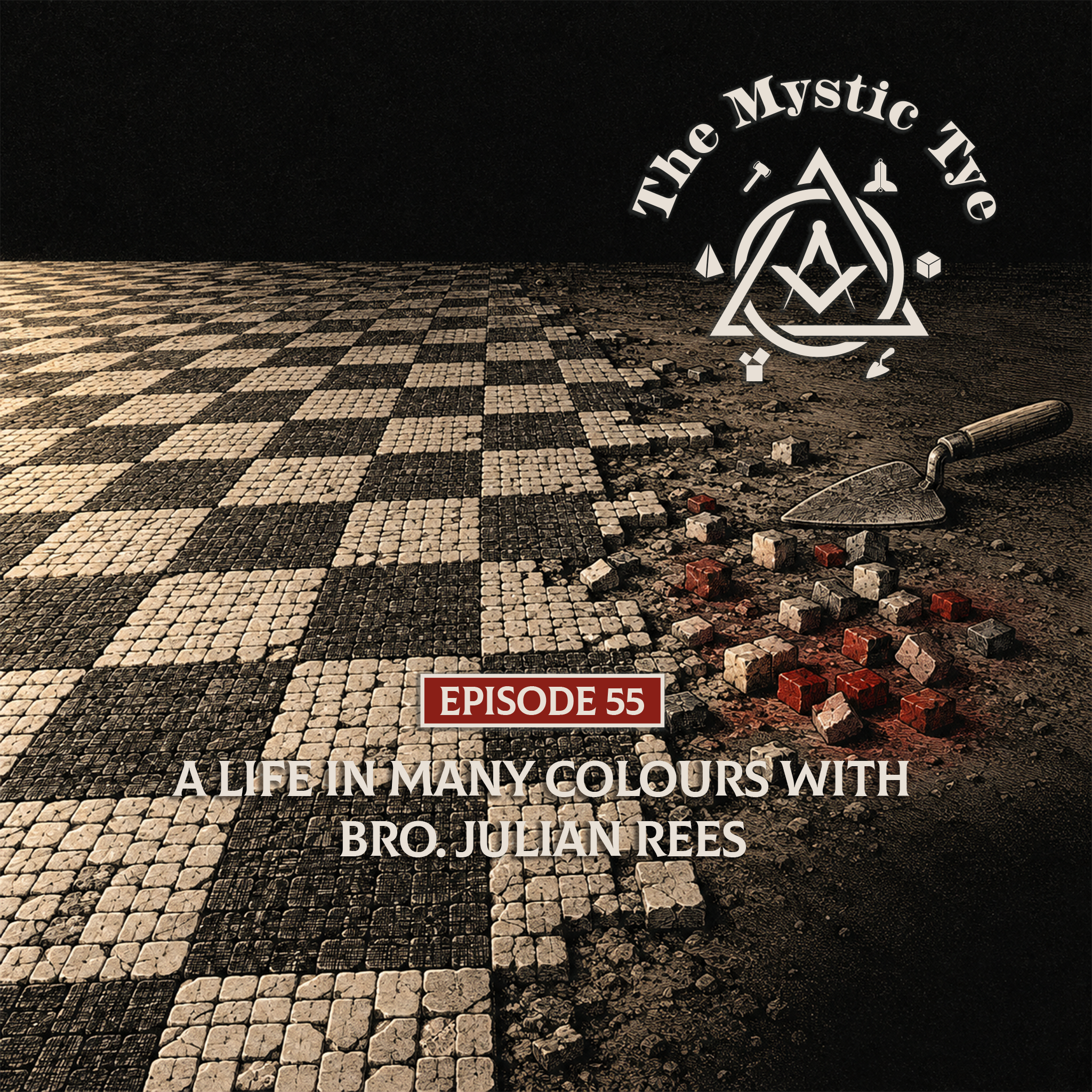
The episode closes on the memoir's title, which came from a kaleidoscope of experiences and Newton's point that light is all the colours, and on Julian's insistence that the journey is nothing like a straight line, from a chapter on interrogation by the East German police to the lesson of the mosaic pavement. A last detour compares the Emulation ritual Julian says has not changed since the 1813 union with the four approved works in Troy's jurisdiction, and the Canadian work that grew out of the colonies. Troy also recommends the Straight White American Jesus and Conspirituality podcasts.
Books mentioned in this episode
A Life in Many Colours: A Masonic Memoir, Julian Rees, Arima Publishing
Here Comes the Light!, Julian Rees
Making Light: A Handbook for Freemasons, Julian Rees, Lewis Masonic
So You Want To Be a Freemason?, Julian Rees, Lewis Masonic
Tracing Boards of the Three Degrees in Craft Freemasonry Explained, Julian Rees, Lewis Masonic
Freemasonry: Heart and Mind. Sketches on Esotericism in English Ritual, Julian Rees
Podcasts recommended
Straight White American Jesus, Brad Onishi
Conspirituality
Links and resources
Esotericism in Freemasonry Conference: masonicconferences.com
RSVP for the upcoming conference: esotericmasonry@gmail.com
Mystic Tye website and event calendar: mystictye.com
Patreon (early episodes, extended cuts, artwork, extras): patreon.com/mystictye
Support the show
If this episode resonated with you, the most helpful thing you can do is leave a review on your favorite podcast platform. We are also building a directory of Freemasonic events and publications. If you know of something coming up, send Troy an email at troy@mystictye.com.
Graphics and web hosting by Art Szabo Creative. Theme music by Organist.
Happy to meet, sorry to part, happy to meet again.